Himalaya Launches Galactosure: A Multi-Component Herbal Approach to Postpartum Lactation Support


Exclusive breastfeeding remains a cornerstone of early infant nutrition and maternal health. However, despite strong public health recommendations, its adoption remains suboptimal. Data from NFHS-5 indicate that only 43% of infants in India are exclusively breastfed for the first six months, underscoring the continued need for structured postpartum lactation support. ¹
Lactation is a complex physiological process influenced not only by maternal nutritional intake, but also by physical recovery after childbirth, psychological stress, sleep deprivation, and hormonal balance. Prolactin and oxytocin play central roles in milk synthesis and let-down, and their regulation may be affected during the postpartum period, particularly in the presence of fatigue or emotional distress.
In clinical practice, women frequently report perceived or actual lactation insufficiency, particularly during the early weeks after delivery. While breastfeeding counselling, maternal nutrition and reassurance remain foundational interventions, adjunct supportive strategies are increasingly being explored to address the multifactorial nature of lactation challenges.
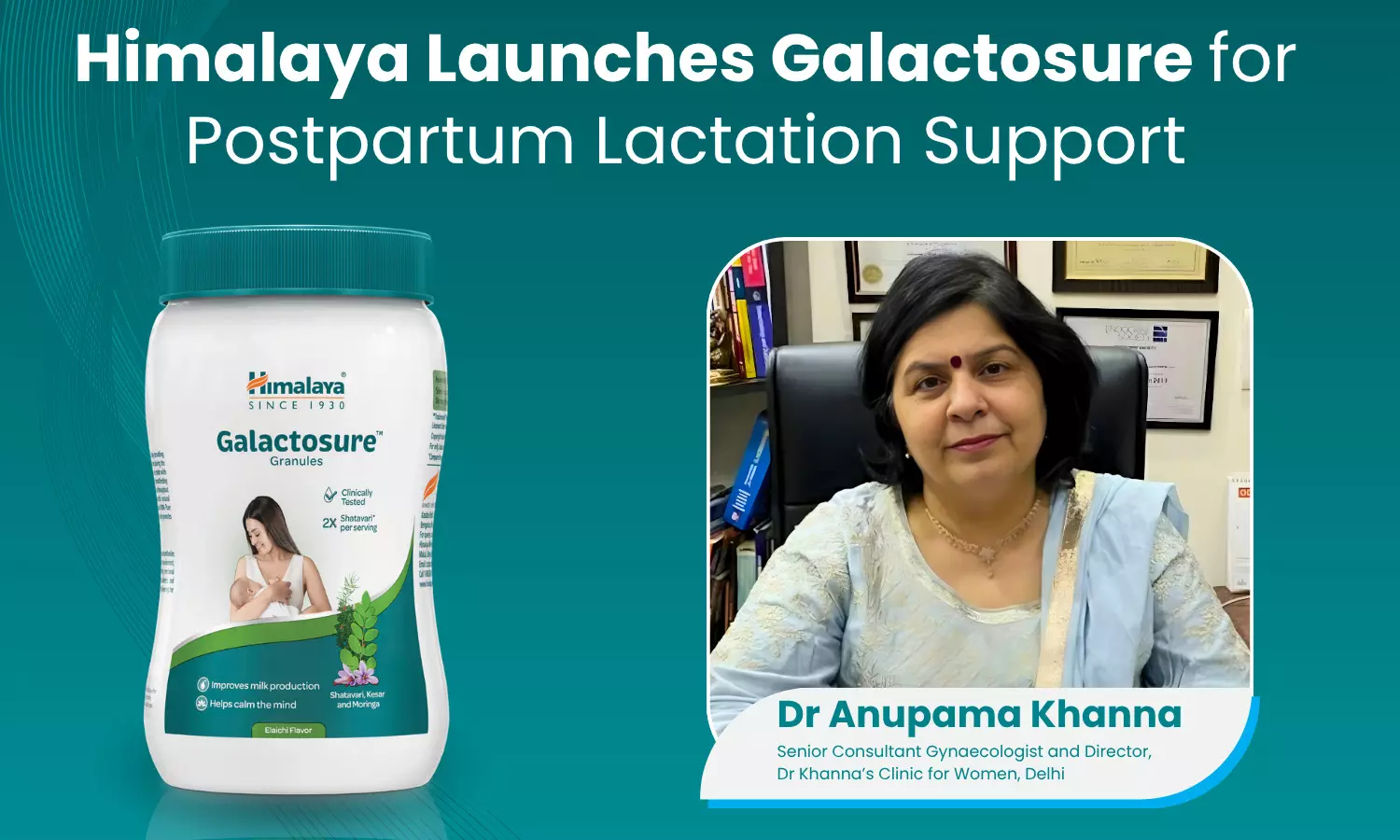
A multi-component herbal formulation by the Himalaya Wellness Company, Galactosure, has been recently developed for postpartum women. It is intended for use in women with or without lactation insufficiency.
Compared to major polyherbal galactagogue product sold in the market, Galactosure contains 2X Shatavari (Asparagus racemosus), Moringa (Moringa oleifera), and Saffron (Crocus sativus), along with supportive botanicals such as Mishreya (Foeniculum vulgare) and Methi (Trigonella foenum-graecum) that are traditionally associated with lactational support and promoting hormonal balance.
- Shatavari is a natural galactogogue. It has traditionally been used in lactation support and is believed to influence prolactin pathways. ²
- Moringa offers essential nutrients that support maternal energy and immunity, both of which are important during the postpartum period. It contributes nutritional value and has been studied for its potential galactogogue properties. ²˒³
- Saffron has been explored for its potential role in supporting emotional well-being during the postpartum period, an important but often under-recognized contributor to lactation outcomes. ⁴
The rationale behind this combination approach is to address multiple contributors to lactation insufficiency — nutritional, hormonal, and psychological, rather than focusing on a single pathway.
Preliminary clinical observations involving 121 postpartum Indian women, demonstrated approximately five-fold higher breast milk production after one month of follow-up, with effects sustained up to 90 days. Maintenance of serum prolactin levels was also observed. No serious or unexpected adverse events were reported.
The formulation is available in granule form for oral administration, with a recommended intake of 10 grams twice daily, typically taken with milk. Such regimens are designed to complement, not replace, established lactation counselling and nutritional interventions.
At the 68th All India Congress of Obstetrics and Gynaecology (AICOG) 2026, emerging clinical data on this formulation were presented as part of broader discussions on postpartum lactation and breastfeeding management. As the field of maternal health evolves, the integration of safe, evidence-informed adjunct options may offer additional support for women navigating the physiological and emotional transitions of early motherhood.
- 1. Exclusive breastfeeding practices and its determinants in Indian infants: findings from the National Family Health Surveys-4 and 5. International Breastfeeding Journal 18 -
- 2. A review on galactogogic properties of india's rich tradition of medicinal herbs and spices for lactation. Traditional and Integrative Medicine. 9 -
- 3. Moringa oleifera: A review on nutritive importance and its medicinal application. Food science and human wellness. 5 -
- 4. Therapeutic application of saffron for improvement of women’s health: a review of literature. Journal of Iranian Medical Council. 4-