
Daraxonrasib Shows Promising Activity in RAS-Mutant Lung Cancer: NEJM
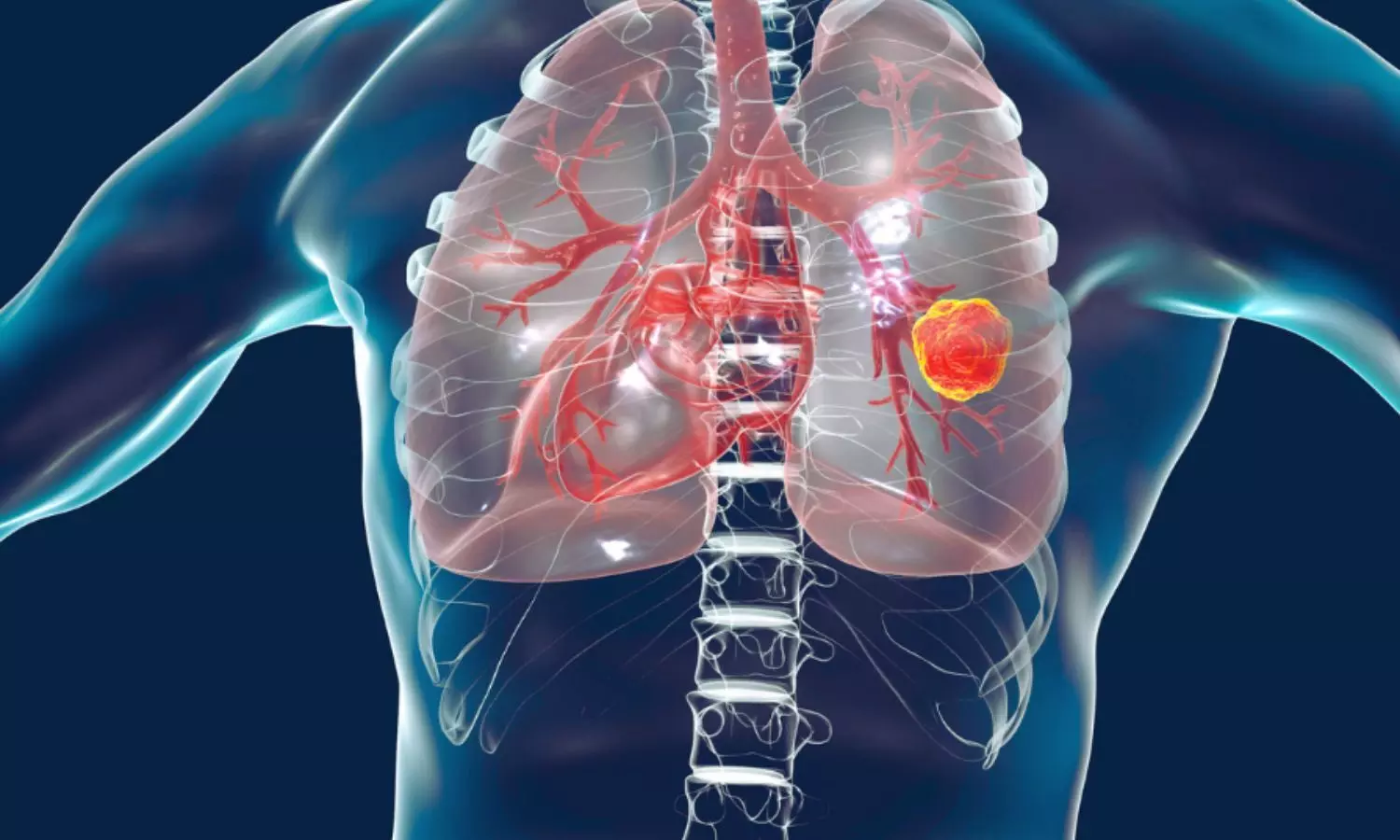


USA: The oral RAS inhibitor daraxonrasib (Rasonque), recently approved by the FDA for metastatic pancreatic ductal adenocarcinoma, demonstrated promising efficacy in previously treated patients with metastatic RAS-mutant non-small cell lung cancer (NSCLC). In a phase I/II trial, the drug achieved objective responses in over 30% of patients and showed encouraging antitumor activity in docetaxel-naive patients previously treated with platinum-based chemotherapy and anti-PD-(L)1 therapy.
The study, published in The New England Journal of Medicine, was led by Kathryn C. Arbour of Weill Cornell Medical College, New York, and colleagues. Researchers evaluated daraxonrasib (RMC-6236), an oral RAS(ON) multiselective inhibitor designed to target mutant and wild-type RAS protein isoforms bound to guanosine triphosphate.
RAS mutations are among the most frequent oncogenic alterations in NSCLC, occurring in approximately 30% of patients. However, the effectiveness and safety of daraxonrasib in patients with previously treated RAS-mutant NSCLC had not been established.
The multicenter phase I–II trial enrolled patients with advanced RAS-mutant NSCLC who had received prior treatment. Participants received oral daraxonrasib at doses ranging from 10 to 400 mg once daily in 21-day treatment cycles. Safety was the primary outcome, while tumor response and duration of response were secondary measures, with responses assessed using RECIST version 1.1.
By the July 21, 2025, data cutoff, 136 patients treated with daraxonrasib doses of up to 300 mg daily were included in the safety and efficacy assessment.
The study led to the following findings:
- Adverse events occurred in 99% of patients receiving daraxonrasib at doses of ≤300 mg, with rash, diarrhea, nausea, vomiting, and mucositis/stomatitis each reported in at least 30%.
- Grade ≥3 adverse events occurred in 54% of patients, including pneumonia (10%), diarrhea (9%), rash (8%), and anemia (5%).
- Four grade 5 adverse events were reported.
- Objective response rates were 31% with doses ≤120 mg, 34% with 160–220 mg, and 37% with 300 mg.
The researchers concluded that daraxonrasib produced objective tumor responses in more than 30% of previously treated patients with metastatic RAS-mutant NSCLC, although treatment was associated with substantial toxicity, including grade 3 or higher adverse events in more than half of patients.
The findings suggest that daraxonrasib may represent a potential treatment option for RAS-mutant NSCLC after prior therapies, while further research will be needed to better define its clinical benefit, optimal dosing, and safety profile.
Reference:
Arbour KC, Punekar S, Luo J, Johnson M, Spira A, Herzberg B, Starodub A, Sommerhalder D, Hecht JR, Garrido-Laguna I, Barve M, Ou SI, Kar S, Bao L, Tao L, Vora R, Hegde A, Saltos A, Azad NS, Hong DS; RMC-6236-001 Investigators. Daraxonrasib for Previously Treated RAS-Mutant Non-Small-Cell Lung Cancer. N Engl J Med. 2026 Sep 3;395(9):882-893. doi: 10.1056/NEJMoa2504059. PMID: 42685317.

Next Story