
New Dutch Guideline Emphasizes Exercise-Based Care for Subacromial Pain Syndrome
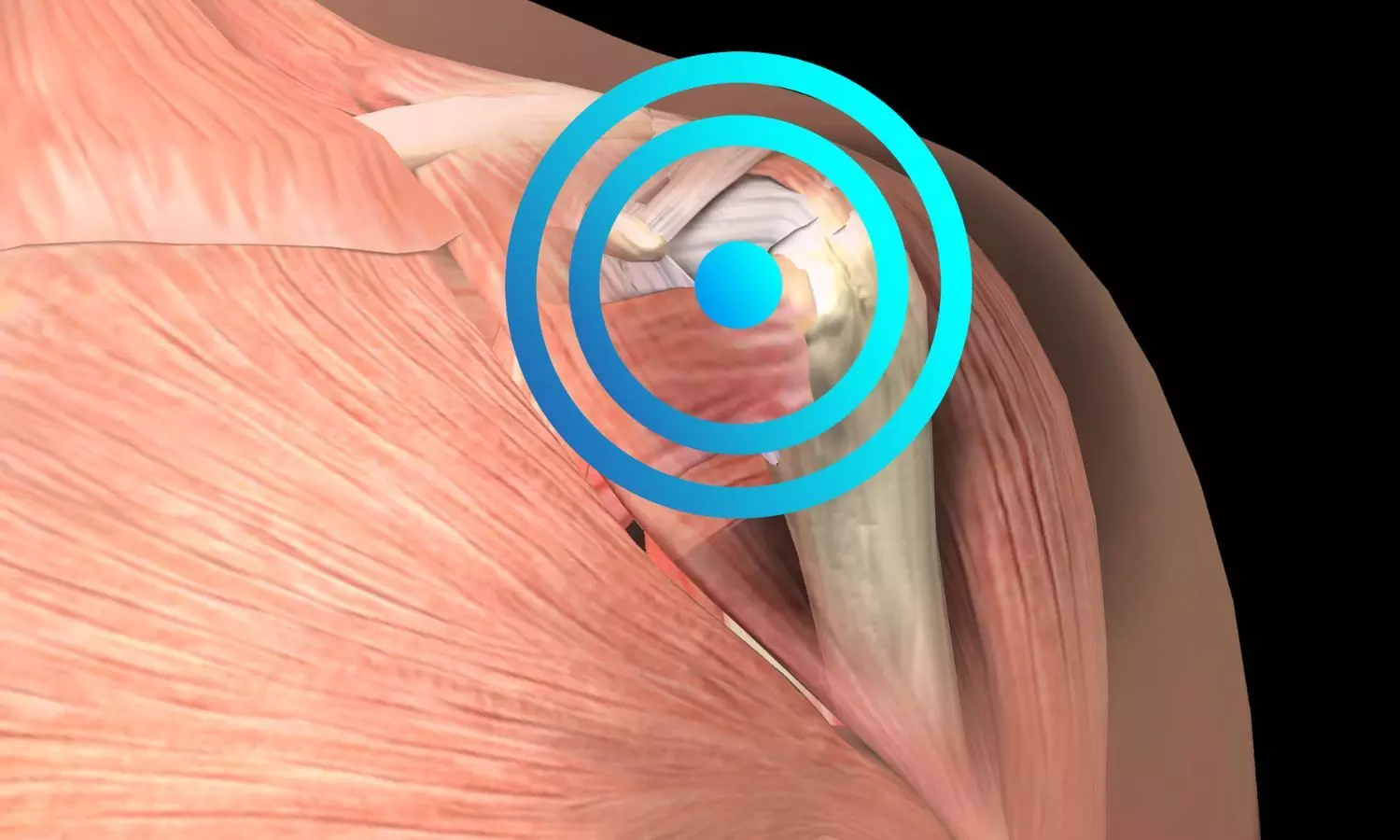


Netherlands: A 2026 update from the Dutch Orthopedic Association provides a multidisciplinary, stepwise approach to diagnosing and treating subacromial pain syndrome (SAPS), with particular relevance for primary care clinicians. The guidance covers physical examination, imaging, conservative treatment, and when surgery should be considered. SAPS describes nontraumatic, nonrheumatologic shoulder pain that is typically aggravated when the arm is elevated and may include conditions such as supraspinatus tendinosis, calcific tendinitis, and degenerative supraspinatus tears.
The updated recommendations, published in Acta Orthopaedica, place greater emphasis on nonoperative management, reflecting evidence that routine subacromial decompression provides little clinical benefit. Diagnosis can generally begin with physical examination, while imaging should be used selectively. A combination of examination maneuvers may improve diagnostic accuracy, with the empty-can test and resisted external rotation showing relatively strong predictive value.
Key Recommendations:
- Physical examination: Combining several shoulder tests may provide better diagnostic accuracy than relying on a single maneuver.
- Imaging: Ultrasound is preferred when a rotator cuff tear is suspected. MRI is recommended when ultrasound is unavailable or when more detailed assessment is required.
- Exercise therapy: Exercise-based treatment should form the foundation of long-term management and recovery.
- Short-term pain relief: NSAIDs and subacromial corticosteroid injections may be used temporarily to reduce pain and enable exercise but are not recommended as long-term treatments.
- Lifestyle and activity modification: Patients should be advised that smoking, obesity, and poor physical conditioning may impair tissue healing. Exacerbating movements, including painful overhead elevation and shoulder rotation, should also be limited.
- Calcific tendinitis: Corticosteroid injection is recommended initially. If symptoms persist, ultrasound-guided barbotage can be considered to break up and remove calcium deposits. Surgery should generally be reserved for persistent large calcifications.
- Suprascapular nerve block: This may be considered when other nonsurgical treatments have failed.
- Supraspinatus tears: Patients with isolated, symptomatic, nontraumatic tears should initially receive exercise-based treatment. Cuff repair can be considered when symptoms persist despite 3–6 months of nonoperative management.
- Surgical management: Surgery should be individualized according to patient and tendon characteristics rather than used routinely as first-line treatment.
The guideline emphasizes a stepped-care model, beginning with clinical assessment and appropriate imaging, followed by education, activity modification, and exercise therapy. Additional treatments such as NSAIDs and corticosteroid injections can be used when necessary for short-term symptom control. Surgical intervention is reserved for selected patients who fail adequate conservative treatment.
Overall, the updated guidance reinforces the importance of conservative, exercise-focused treatment for SAPS, while providing clearer criteria for imaging, injections, barbotage, and surgery. The recommendations are particularly relevant to primary care because most patients can be initially assessed and managed without immediate referral for operative treatment.
Reference:
Lambers Heerspink FO, et al. Update of guideline for diagnosis and treatment of subacromial pain syndrome: a multidisciplinary review by the Dutch Orthopedic Association Part 1: preventive measures, diagnostics, and non-surgical treatment of subacromial pain syndrome. Acta Orthop 2026 Feb 16; 97:91. DOI: 10.2340/17453674.2026.45365.
Lambers Heerspink FO, et al. Update of guideline for diagnosis and treatment of subacromial pain syndrome: a multidisciplinary review by the Dutch Orthopedic Association Part 2: Operative considerations and treatment of various conditions related to subacromial pain syndrome. Acta Orthop 2026 Feb 16; 97:99. DOI: 10.2340/17453674.2026.45410.

Next Story