
Intramedullary Nailing Outpaces Minimally Invasive Plate Osteosynthesis in Bone Healing, Suggests Study
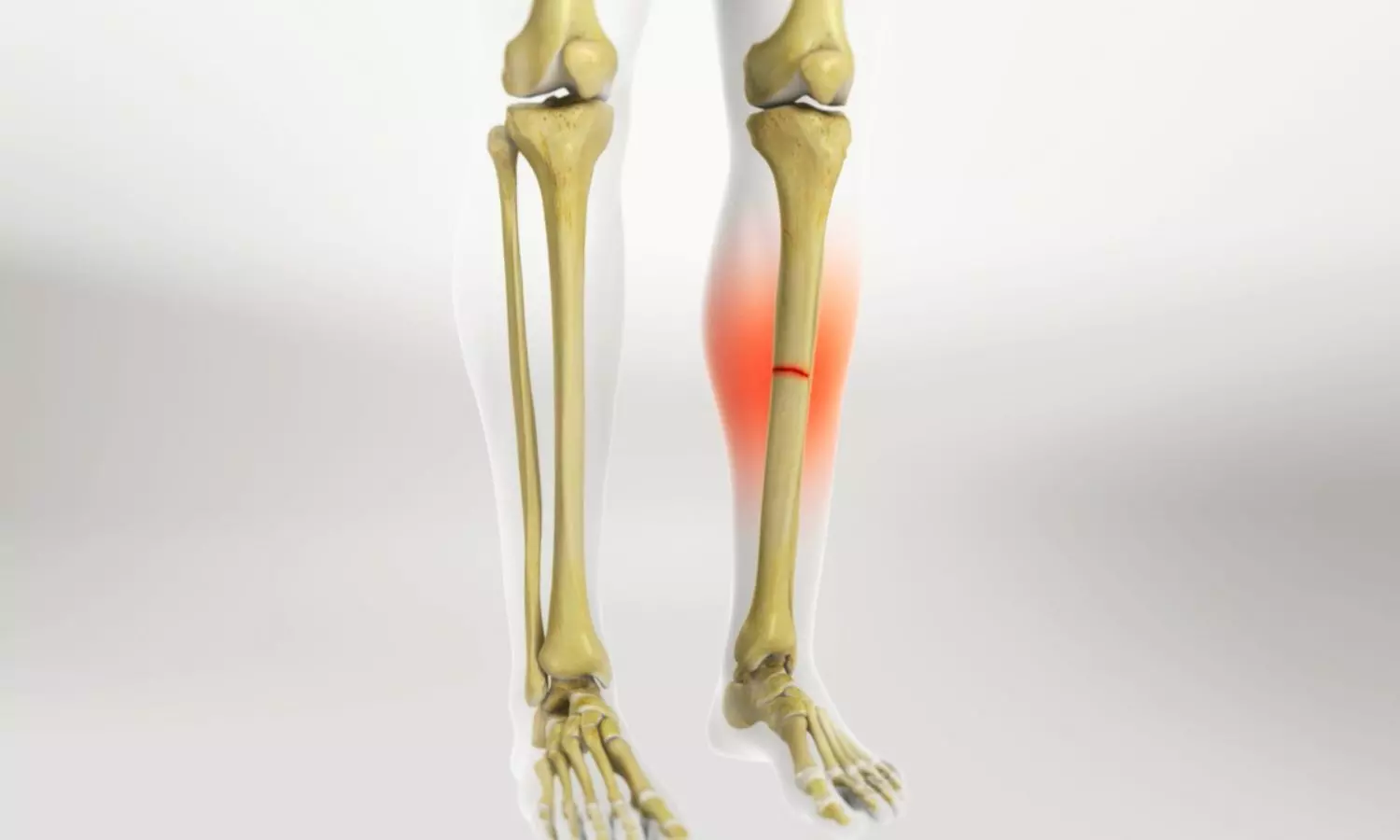


A recent one-year prospective and retrospective study published in the Indian Journal of Orthopaedics Surgery in April 2025 reveals that intramedullary nailing (IMIL) for extra-articular distal tibia fractures yields excellent functional outcomes and accelerates bone healing, achieving union in 9 weeks versus 12 weeks for minimally invasive plate osteosynthesis (MIPO).
Despite the effectiveness of both IMIL and MIPO, historical complications—such as knee pain with nailing or implant prominence with plating—leave the optimal surgical approach unclear. To address this clinical gap, Dr. Kumarjuvekar and colleagues systematically compared the functional outcomes, radiological results, and complication profiles of both fixation methods.
Therefore, the one-year prospective and retrospective observational study of 54 adult patients compared the clinical outcomes of intramedullary nailing versus plating for distal tibia fractures. After excluding patients with intra-articular fractures, skeletal immaturity, or pre-existing deficits, the study primarily evaluated key clinical endpoints, including fracture union time, pain scores, and joint mobility.
Key Clinical Findings of the Study Includes:
Accelerated Union Time: Researchers found that fracture union occurred significantly earlier in the intramedullary nailing cohort with a mean consolidation time of 9 weeks compared to 12 weeks for those treated with minimally invasive plating.
Comparable Functional Scores: Investigators noted no statistically significant differences between the two distinct treatment modalities regarding the Lower Extremity Functional Scale and the John and Wruh criteria consistently recorded across the one-year clinical follow-up.
Equitable Pain Reduction: Scientists reported that the Visual Analogue Scale scores for subjective pain decreased steadily and equally in both therapeutic groups, demonstrating no significant clinical divergence at any postoperative visit.
Divergent Joint Kinematics: Clinicians observed that while nailing patients achieved faster ankle range of motion post-surgery, they initially experienced slightly delayed full knee flexion due to predictable anterior knee pain, though average mobility eventually equalized.
Reliable Union Rates: Authors highlighted a robust healing trajectory where 100% of the intramedullary nailing cases achieved complete radiographic union by 6 months, closely matched by an impressive 96% success rate in the plating group.
The results suggest that while intramedullary nailing provides a tangible early advantage with a swifter mean union time of just 9 weeks and accelerated initial weight-bearing capabilities, both precise surgical techniques consistently deliver equally effective long-term functional recovery for distal extra-articular fractures.
Thus, the study concludes orthopedic clinicians may prudently consider intramedullary nailing as a standard approach to facilitate advantageous earlier weight-bearing and rapid mobilization while thoughtfully reserving minimally invasive locked plating techniques primarily for highly comminuted or specialized fracture patterns.
The valuable clinical insights drawn from the comprehensive evaluation are somewhat naturally constrained by the relatively modest sample size of 54 participants, suggesting that broader multi-center observational assessments could further validate and gracefully refine these foundational surgical guidelines.
Reference
Kumarjuvekar SA, Puranik RG, Gathani HJ, Jadhav RM. Comparative study of functional and radiological outcomes between IMIL and MIPO in distal tibia fractures in adults. Indian Journal of Orthopaedics Surgery. 2025;11(1):20–25.
