
7-Day Continuous ECG Monitoring Improves Detection of Pediatric Tachyarrhythmias: Study
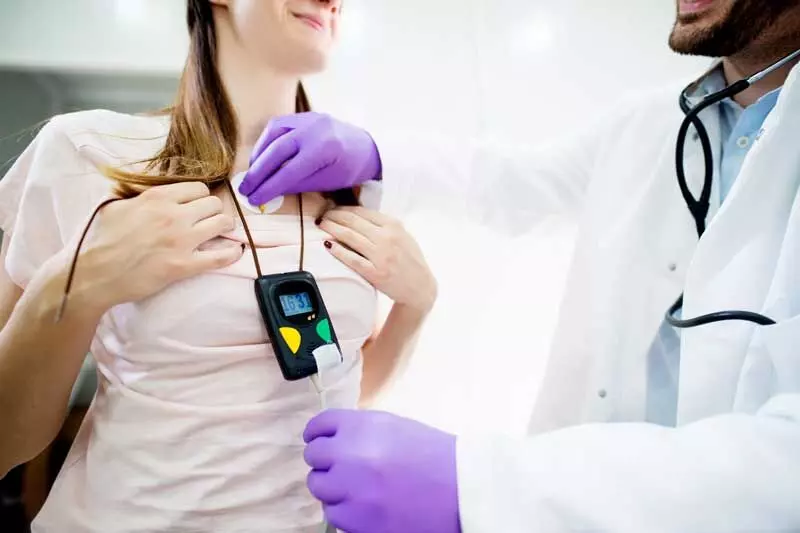


A new study published in the Journal of American Medical Association showed that seven-day continuous ambulatory ECG monitoring provided a much better diagnostic result compared to 24-hour Holter monitoring and 7-day event recording.
The effectiveness of various types of ambulatory electrocardiographic monitoring in diagnosing conditions in this group of patients is not well understood. Therefore, this study evaluated and compared the diagnostic value and practical usefulness of three different ambulatory electrocardiographic methods in children.
This study was conducted at an outpatient clinic and an inpatient ward of the National Taiwan University Children’s Hospital.It included patients under 18 years of age who had ambulatory electrocardiographic monitoring performed between December 2022 and January 2025. A 7-day continuous Holter monitor, which also served as an event recorder, was used for the recordings. The results from the first 24 hours of monitoring were classified as the 24-hour Holter results.
Arrhythmias were classified as major, which includes tachyarrhythmia or bradyarrhythmia, or minor, which refers to extrasystolic arrhythmia. Every patient was monitored for a period of one year, and the final diagnosis of arrhythmia served as the standard for evaluation. The main outcome was the identification of an arrhythmia, while the secondary outcome was any alteration in the patient's clinical treatment based on the results of the monitoring.
A total of 435 children, of whom 54% were female, with an average age of 12.3 years (standard deviation of 3.9 years), were included in the study. 7-day Holter monitoring identified a significantly higher number of major arrhythmias when compared to 24-hour Holter monitoring or 7-day event recording, with 6.2% versus 2.3% respectively (P < 0.001). It also showed greater sensitivity around 73% compared to 27%, and had a negative predictive value of 97.5%.
Arrhythmias that were linked to symptoms occurred in 10.7% of the children, which triggered the event recorder. The rate of management changes was higher with 7-day Holter monitoring (7.1%) when compared to 24-hour Holter (1.6%) or 7-day event recording (2.8%; both P < 0.001), which supports the better diagnostic effectiveness of seven-day Holter monitoring.
Overall, 7-day continuous ambulatory electrocardiographic monitoring provided a significantly greater diagnostic benefit when compared to 24-hour Holter monitoring and 7-day event recorders. The use of continuous monitoring may be more effective in identifying tachyarrhythmias that could impact clinical decisions.
Source:
Hsu, Y. T., Tseng, W. C., Hsu, Y. L., Wu, M. H., Lu, C. W., Wu, K. L., Peng, W. F., & Chiu, S. N. (2026). Ambulatory electrocardiography modalities in pediatric arrhythmia detection and management. JAMA Pediatrics. https://doi.org/10.1001/jamapediatrics.2026.4910

