HOPE Perfusion Improves Outcomes After Liver Transplantation: JAMA


Ischemia-reperfusion injury contributes to graft dysfunction after liver transplant. Hypothermic oxygenated perfusion (HOPE) has been shown to improve liver function, but its benefit in extended criteria donors in a US population remains unclear.
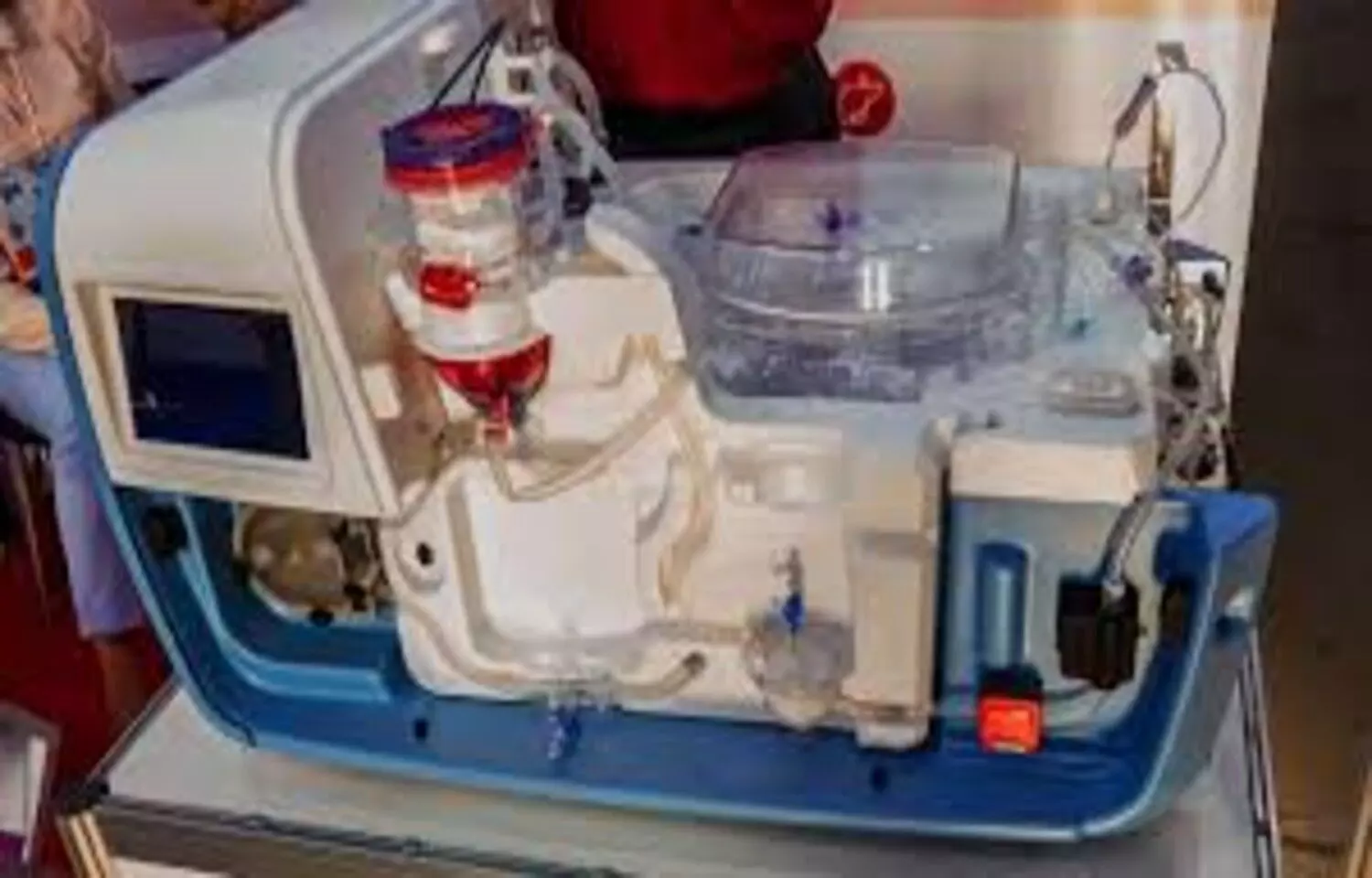
A study was done to assess whether back-to-base portal-venous HOPE impacts outcomes after liver transplant in the US. The Bridge to HOPE Trial is a multicenter, randomized, open-label trial with 1-year follow-up. The study took place at 15 US liver transplant centers and patients were enrolled between January 2021 and May 2023. Central assessment of complications and cholangiograms for nonanastomotic biliary strictures (NAS) was blinded to treatment arm. Participants included 219 recipients of extended-criteria donor livers after brain death (DBD) and after circulatory death (DCD) who were randomized 1:1 to HOPE after static cold storage (SCS) (n = 109) or SCS only (n = 110). Randomization was performed after liver inspection and acceptance for transplant. Data were analyzed from December 2024 to July 2025. After SCS and transport, livers underwent portal-venous HOPE until implant, using the VitaSmart HOPE System. The primary efficacy end point was early allograft dysfunction (EAD). Other main outcomes included model for early allograft function (MEAF) score, hospital length of stay (LOS), patient and graft survival, and biliary complications. Additional post hoc analyses were performed. Results Overall, 219 patients (82 female [37.4%] and 137 male[62.6%]) were included (DCD, 57 of 219 [26%]) with 97% (212 of 219) completing 12-month follow-up. EAD incidence was 20.2% (22 of 109) with HOPE vs 37.3% (41 of 110) with SCS (rate difference, −17.1%; 95% CI, −27.2 to −7.0; noninferiority P < .001; superiority P = .005). HOPE treatment led to significantly lower MEAF mean (SD) scores (HOPE group, 4.28 [1.75]; control group, 4.82 [1.85]; mean difference, −0.54; 95% CI, −1.02 to −0.06; P = .03) and shorter median LOS (hazard ratio, 1.32; 95% CI, 1.01-1.73; P = .04). NAS on imaging and 1-year survivals were comparable between groups (patients: HOPE group, 106 of 109 [97.2%] vs SCS, 106 of 110 [96.4%]; graft: HOPE group, 104 of 109 [95.4%] vs SCS, 102 of 110 [92.7%]). Post hoc analyses showed numerically less graft loss due to NAS after HOPE (4 vs 1) and less major complications (Clavien-Dindo classification ≥IIIa) per patient, respectively.
Back-to-base portal-venous HOPE was compared with SCS alone for extended risk DBD and DCD livers. The HOPE approach was safe and associated with reduced EAD, MEAF score, and LOS. These findings support the use of HOPE as a pragmatic strategy to improve early posttransplant outcomes.
Reference:
Reich DJ, Mao S, Satish S, et al. Portal-Venous Hypothermic Oxygenated Perfusion for Liver Transplant: A Randomized Clinical Trial. JAMA Surg. Published online May 27, 2026. doi:10.1001/jamasurg.2026.1604
Keywords:
Reich DJ, Mao S, Satish S, HOPE, Perfusion, Improves, Outcomes, After, Liver, Transplantation, JAMA