
Coronary heart disease: cardiac MRI useful addition to existing CHD diagnostics
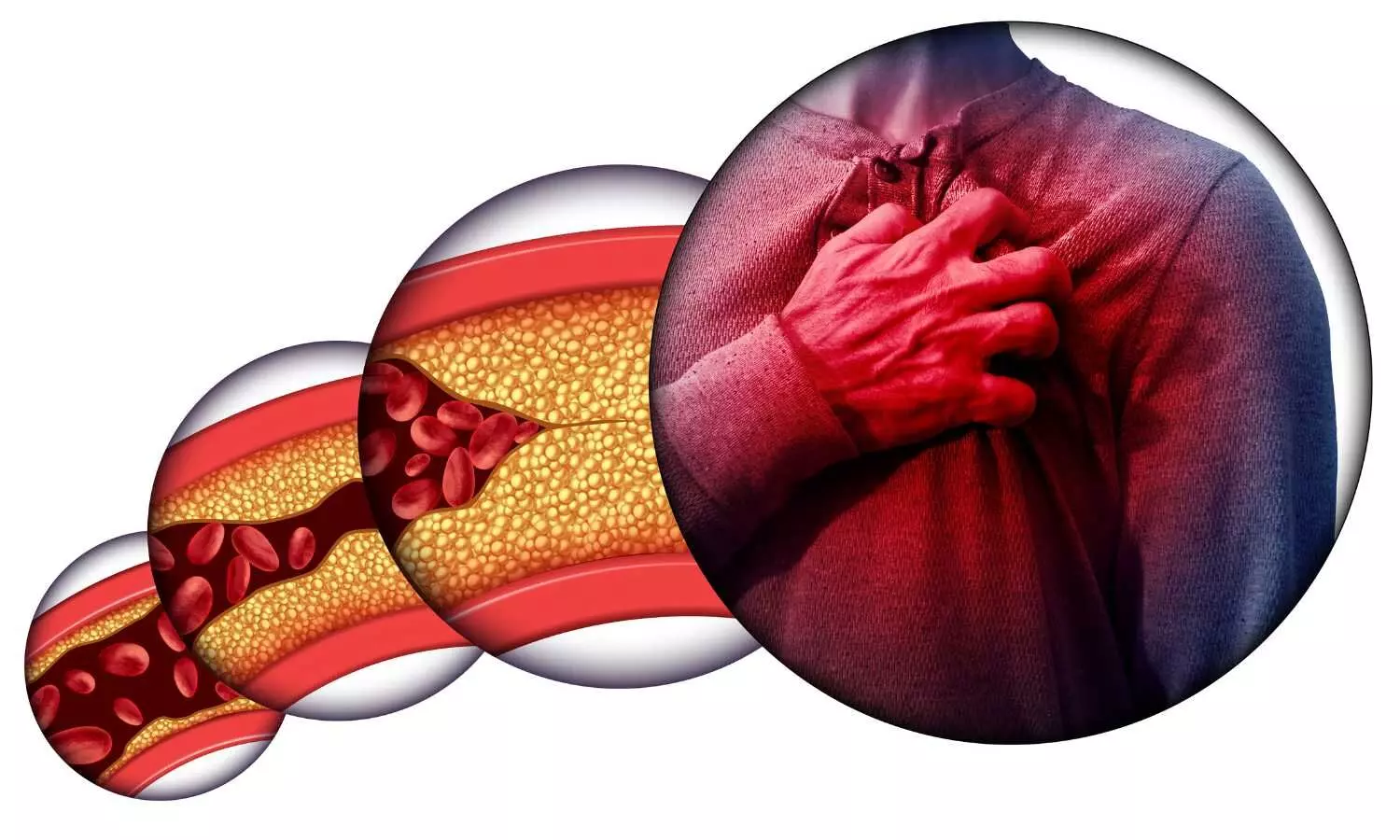


Cardiac magnetic resonance imaging (MRI) is an appropriate non-invasive procedure for functional diagnostics in patients who, as a result of basic diagnostics, are suspected of having chronic coronary heart disease (CHD) or progression of known CHD: The diagnostic accuracy of cardiac MRI is at least comparable to that of SPECT (single photon emission computed tomography) in the detection of CHD, but does not expose patients to radiation. This is the final conclusion of the benefit assessment.
The (German-language) report was published in October 2025, an English translation in January 2026.
On behalf of the Federal Joint Committee (G-BA), the Institute for Quality and Efficiency in Health Care (IQWiG) examined the advantages and disadvantages of cardiac MRI compared with a diagnostic strategy without MRI.
Only one, minimally informative study was identified in which patients were randomized to either MRI or SPECT. The IQWiG researchers therefore also investigated the question of the diagnostic accuracy of cardiac MRI compared with SPECT. In the studies on this topic, all patients underwent both MRI and SPECT, and all findings were verified by a further diagnostic method, i.e. invasive coronary angiography (ICA).
The results from six studies showed that cardiac MRI had at least a comparable hit rate (diagnostic accuracy). Since MRI, in contrast to SPECT, does not involve radiation exposure, there was overall an advantage for patients, which IQWiG assessed as a ‘hint of a greater benefit’.
“MRI represents a useful expansion of the range of diagnostic options for suspected CHD. We expect that practitioners will continue to use CHD diagnostics in a differentiated manner based on the individual patient situation, and that double diagnostics will be avoided,” says Martina Lietz, research associate in IQWiG’s Non-Drug Interventions Department and project manager of this benefit assessment. The general availability of MRI should then also be unproblematic.
Differentiated CHD diagnostics are necessary and possible
As many as four different diagnostic techniques are primarily considered when a person with heart problems is found to have a CHD probability of around 15 to 85 per cent after basic diagnostics: MRI, SPECT and stress echocardiography are referred to as functional procedures because they examine the function of the heart, and are fundamentally comparable with one another. However, stress echocardiography is being used less and less for various clinical reasons and is therefore considered to be of secondary importance. IQWiG therefore did not include this comparison.
Cardiac computed tomography (CT), or computed tomography coronary angiography (CCTA), is a morphological procedure that examines the coronary arteries and hence differs fundamentally from cardiac MRI. Therefore, comparing these two methods did not appear to be very meaningful.
The decision in favour of a particular diagnostic procedure depends on the pretest probability, the individual patient situation (e.g. comorbidities) and the local availability of diagnostics. In addition, contraindications and side effects must be taken into account, especially with regard to the heart’s ability to undergo functional stress diagnostic procedures or the feasibility of administering contrast agents during an examination.
Invasive coronary angiography (ICA, ‘cardiac catheterization’), on the other hand, should only be used when the probability of CHD is very high (> 85 per cent) and should therefore in many cases only be performed after signs of CHD have been detected by MRI, SPECT, stress echocardiography or cardiac CT. When used in a differentiated manner, the findings of any of these four procedures are ideally unambiguous, so that no more than one of these tests is required to detect or rule out CHD with relative certainty.
Process of report production
On 26 September 2024, the G-BA commissioned IQWiG to conduct a benefit assessment of cardiac magnetic resonance imaging in coronary heart disease. IQWiG published the preliminary results in July 2025 and interested parties were invited to submit comments. After completion of the commenting procedure, the report was revised and sent to the commissioning agency in October 2025. The written comments submitted and the minutes of the scientific debate are published in a separate document at the same time as the final report.
